Office Spaces in Manhattan

Manhattan's office space landscape reads like a real estate power play where Studio by Tishman Speyer commands $800+ per desk at Rockefeller Center while The Farm SoHo counters with $29 day passes in a converted loft. From Convene's hospitality-first approach at 530 Fifth Avenue with its 715 workstations to intimate founders' clubs like The Malin capping membership at 32 Mercer Street, the borough's 30+ major operators run the spectrum from institutional landlord flex suites to indie coworking havens. Transit geometry shapes everything here: Silver Suites at 7 World Trade leverages the Fulton Center hub's 11 lines, while Servcorp's 85th-floor perch at One World Trade sells prestige over convenience. At Zipcube, we track this entire ecosystem so you can skip the broker dance and compare real options across FiDi's converted banking halls to Hudson Yards' wellness-integrated workspaces.
Select type of offices and team size to get better results.
118 Spring street
No reviews yetNew
  1. · Prince St Station
118 Spring street
From Price$8,500/mo · 3 Private Office
Up to 25 people ·
Cubico
No reviews yetNew
  1. · Canal St
Cubico
From Price$400/mo · Hot/Dedicated Desk
From Price$850/mo · 8 Private Office
Up to 20 people ·
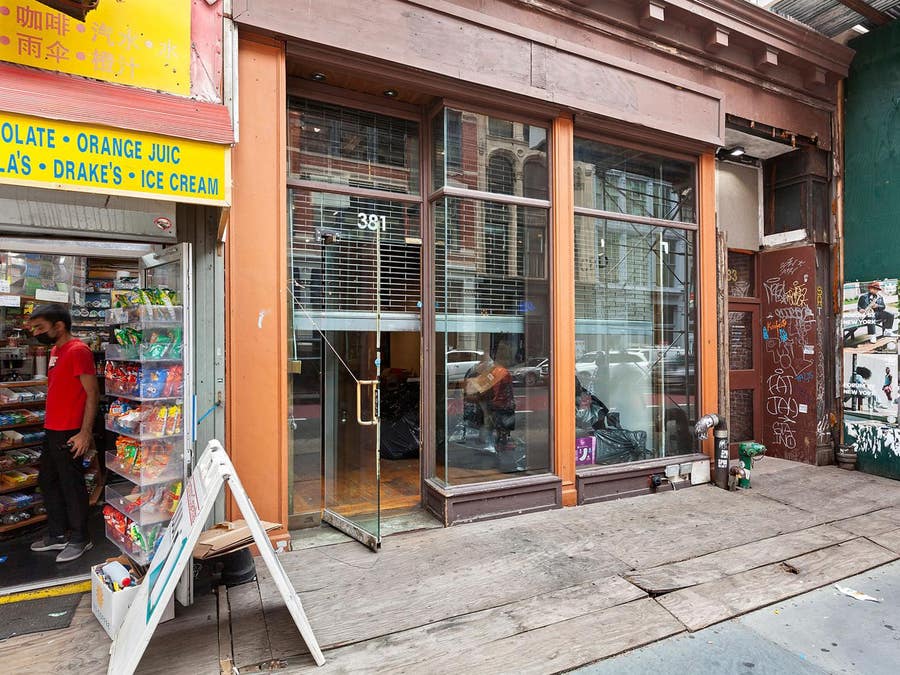
381 Broadway
No reviews yetNew
  1. · Franklin Street Station
381 Broadway
From Price$10,000/mo · 5 Private Office
Up to 70 people ·
199 Lafayette
No reviews yetNew
  1. · Spring Street
199 Lafayette
From Price$5,000/mo · 5 Private Office
Up to 450 people ·
147 Spring Street
No reviews yetNew
  1. · Spring St.
147 Spring Street
From Price$6,000/mo · 3 Private Office
Up to 25 people ·
381 Broadway
No reviews yetNew
  1. · Franklin Street Station
381 Broadway
From Price$10,000/mo · 5 Private Office
Up to 70 people ·
The Yard - Lower East Side
No reviews yetNew
  1. · Delancey St · Essex St
The Yard - Lower East Side
Price$550/mo · Fixed Desk
Up to 1 person ·
The Farm - Nomad
No reviews yetNew
  1. · New York
The Farm - Nomad
Price$179/mo · Hot Desk
Up to 1 person ·
199 Lafayette
No reviews yetNew
  1. · Spring Street
199 Lafayette
From Price$5,000/mo · 5 Private Office
Up to 40 people ·
Office Space in Manhattan
No reviews yetNew
  1. · 33rd Street
Office Space in Manhattan
Price$1,300/mo · 1 Private Office
Up to 2 people ·
Skip the scroll
Get a tailored shortlist from an expert
We'll send you a free expertly-curated selection of your best matches on (and off) the market
147 Spring street
No reviews yetNew
  1. · Spring St.
147 Spring street
From Price$5,000/mo · 3 Private Office
Up to 25 people ·
Affect Midtown
No reviews yetNew
  1. · 34 St - Herald Sq Subway Station
Affect Midtown
From Price$550/mo · Hot Desk
Up to 6 people ·
Green Desk - Office Space Dumbo
No reviews yetNew
  1. · York St
Green Desk - Office Space Dumbo
Price$199/mo · Fixed Desk
Up to 5 people ·
Bat Haus Coworking and Event Space
No reviews yetNew
  1. · Jefferson Street
Bat Haus Coworking and Event Space
Price$299/mo · Hot Desk
Up to 3 people ·
203 Lafayette
No reviews yetNew
  1. · Spring Street
203 Lafayette
Price$15,000/mo · 1 Private Office
Up to 25 people ·
118 Spring street
No reviews yetNew
  1. · Prince St Station
118 Spring street
From Price$7,000/mo · 3 Private Office
Up to 25 people ·
203 Lafayette
No reviews yetNew
  1. · Spring Street
203 Lafayette
Price$15,000/mo · 1 Private Office
Up to 25 people ·
Nomadworks
No reviews yetNew
  1. · 28 St
Nomadworks
Price$400/mo · Hot Desk
Up to 1 person ·
The Farm Soho
No reviews yetNew
  1. · Canal St
The Farm Soho
Price$179/mo · Hot Desk
Up to 1 person ·
SBN New York (Virtual Offices, Mailbox, Coworking Space)
No reviews yetNew
  1. · 33 St
SBN New York (Virtual Offices, Mailbox, Coworking Space)
Price$900/mo · Hot Desk
Up to 2 people ·

Your Questions, Answered

Midtown commands a 15-30% premium with venues like Studio by Tishman Speyer at Rockefeller Center starting at $800 per desk while Downtown's Bond Collective at 55 Broadway offers comparable private offices from $700. The gap widens at the luxury tier where Convene's 530 Fifth Avenue suites run $1,200-$1,800 per desk versus WeWork's 85 Broad Street at $600-$1,050. However, prestige addresses blur these lines completely. Servcorp's One World Trade Center location on the 85th floor matches Midtown pricing at $1,200-$2,000 per desk despite the FiDi address. Smart operators time their moves around lease cycles, often securing 20-40% discounts during Q4 when Midtown landlords need to fill year-end inventory.

The Lower East Side and Herald Square deliver surprising value with quality operators like The Yard at 85 Delancey offering industrial-chic offices from $500 per desk. NoMad bridges the gap perfectly between price and prestige, where Industrious at 776A 6th Avenue provides day passes at $60 and full offices around $1,000 per desk. The Farm SoHo takes the value crown with 30-day unlimited passes at $250, though you trade amenities for affordability. Penn District properties capitalize on commuter convenience without Midtown markup. Teams of 10-20 find the sweet spot at venues like Corporate Suites' 2 Park Avenue location where bulk deals can drop per-desk costs by 25%. The key is matching growth trajectory to lease flexibility since jumping from 5 to 15 desks mid-lease typically costs 40% more than planning ahead.

Landlord flex operations like Silver Suites at 4 World Trade Center include perks you won't find at WeWork: direct building management relationships, preferential treatment for expansions, and included conference credits worth $500-$1,000 monthly. These institutional operators provide enterprise-grade infrastructure that independent coworking rarely matches. Workspace by Rockefeller Group at 45 Rockefeller Plaza exemplifies this with discrete executive suites and white-glove services starting around $1,500 per desk. Traditional coworking wins on community and flexibility. WeWork's 500 7th Avenue location offers month-to-month terms from $620 while landlord suites typically require 6-12 month commitments. The sweet spot for many teams is Convene's hybrid model at 530 Fifth Avenue, blending hospitality services with institutional backing. Consider that 73% of teams over 20 people eventually graduate from pure coworking to managed suites.

Beyond the headline rate, Manhattan offices layer on expenses that can add 20-35% to your monthly burn. Servcorp at 667 Madison Avenue transparently bundles services, but many operators charge separately for after-hours HVAC ($150-$300/hour), guest reception ($50-$100/month per employee), and meeting room overages. IT setup runs $2,000-$5,000 even at plug-and-play spaces like Industrious Bryant Park if you need dedicated bandwidth or VPN configuration. Parking murders budgets at $400-$700 monthly, though smart teams negotiate commuter benefits instead. Insurance requirements vary wildly with FiDi venues like Serendipity Labs at 28 Liberty demanding $2M liability policies while creative spaces accept standard coverage. Moving costs hit twice: physical relocation ($3,000-$8,000) plus the productivity loss during transition that McKinsey values at $1,400 per employee. Factor these into your comparison spreadsheet when evaluating that seemingly cheap Herald Square option.

Meeting room availability varies drastically from marketing promises, with venues like Convene at 530 Fifth Avenue operating 22 dedicated rooms that members can actually book versus spaces that share 2-3 rooms among 200 members. WorkHouse NYC at 21 W 46th Street stands out with 18 meeting rooms across its floors, virtually eliminating booking conflicts. The math matters: venues need roughly one meeting room per 15-20 members for smooth operations. Industrious locations consistently deliver with their meeting-room-credit model, giving teams at Union Square or Bryant Park locations $500-$1,000 monthly in room credits. Studio by Tishman Speyer takes a different approach with massive event spaces on floors 2 and 11 that handle everything from board meetings to product launches. Pro tip: always ask for the actual booking calendar during tours since 60% of meeting room complaints stem from perpetual unavailability rather than quality issues.

Properties within 5 minutes of major hubs command 20-30% premiums, but the calculation goes deeper than proximity. Silver Suites at 7 World Trade Center leverages Fulton Center's 11 lines to justify $1,000+ per desk pricing, while The Yard Lower East Side sits 2 minutes from Delancey/Essex yet charges $500-$950 because the F/J/M/Z lines don't connect to Midtown power corridors. Express stops matter enormously with venues near 14th Street-Union Square or Times Square-42nd Street seeing 40% faster lease-up rates. Servcorp's One World Trade location proves that direct PATH access adds 15% to achievable rents by capturing Jersey commuters. Smart operators like Bond Collective at 55 Broadway market their 1-minute walk to Rector Street, understanding that every additional minute of walking drops desirability by 5-8%. The winner's formula: 4+ lines within 5 minutes, with at least one express service to both East and West sides.

Despite marketing claims of instant availability, only about 30% of advertised Manhattan offices are genuinely move-in ready within 5 business days. WeWork and Regus maintain the deepest ready inventory with locations like WeWork SoHo at 524 Broadway typically holding 5-10 vacant offices. Premium spaces move differently with NeueHouse Madison Square operating waitlists for their private Studios despite $4,500/month pricing. Seasonal patterns are predictable: September and January see 70% occupancy spikes while August and December offer 25% more selection. The Farm SoHo and other day-pass-friendly venues never really fill up for hot-desking, maintaining 40% daily capacity even during peak times. Landlord-operated spaces like Studio by Tishman Speyer can create custom suites within 2-3 weeks, faster than traditional build-outs but slower than true plug-and-play. The hack: contact Zipcube directly for real-time availability since operator websites often show phantom inventory to generate leads.

Hybrid teams need radically different setups than traditional offices, and Manhattan operators are finally catching up. Industrious at Equinox Hudson Yards pioneered the wellness-integrated model where employees hot-desk 2-3 days while accessing Equinox facilities, essentially replacing dedicated desks with lifestyle amenities. The Malin SoHo offers hybrid-specific memberships combining 10 days monthly access with permanent storage lockers, solving the laptop-carry problem. Calculate at 0.6 desks per employee for true hybrid operations versus the old 1:1 ratio. Meeting room density becomes critical since hybrid teams conduct 3x more formal meetings. Convene's 530 Fifth Avenue model works perfectly here with abundant bookable rooms and day passes for overflow days. Pricing sweet spots emerge around $400-$600 per employee monthly for 2-3 day weekly access, compared to $1,000+ for dedicated desks. Consider neighborhood dynamics too since venues near restaurants and retail like those in SoHo or Union Square see 40% higher hybrid utilization than pure business districts.

Manhattan's office spaces promise enterprise-grade connectivity but delivery varies wildly. Serendipity Labs Financial District provides legitimate HIPAA and SOX-compliant infrastructure with redundant fiber and managed firewalls, justifying their premium positioning. Standard coworking delivers 100-300 Mbps shared bandwidth that craters during peak hours, though WeWork upgraded major locations like 85 Broad Street to gigabit connections. Dedicated bandwidth costs $500-$2,000 monthly extra at most venues except landlord-operated spaces like Silver Suites at 4 World Trade where it's bundled. WiFi calling remains spotty in tower locations, making cellular boosters essential above the 30th floor. Convene and Industrious include Zoom Room setups in their meeting spaces, while budget operators require you to BYOD everything. Security varies from KeyCard-only at corporate venues to smartphone apps at modern spaces like The Malin. Pro insight: always test upload speeds during tours since video calls need 25+ Mbps upstream and most venues optimize for download only.

Growth flexibility separates professional operators from glorified room rentals. Industrious excels here with their multi-location Manhattan network allowing seamless moves from their NoMad starter offices to Bryant Park headquarters spaces as you scale from 5 to 50 people. Silver Suites at both 4 and 7 World Trade Center provides contiguous expansion rights, meaning they'll move adjacent tenants to give you a full floor. This matters since moving offices costs $25,000-$50,000 in productivity and logistics. WeWork's All Access membership lets you test different locations before committing, though their enterprise pricing kicks in above 20 desks. Landlord-operated venues like Studio by Tishman Speyer offer the ultimate flexibility: start in managed suites then graduate to direct leases in the same building with relationship continuity. The Malin takes a different approach, capping total membership to maintain quality but offering larger team suites by invitation. Smart growth planning means choosing operators with 3+ Manhattan locations and formal expansion policies rather than hoping space opens up.

Office Spaces in Manhattan:
The Expert's Guide

Manhattan's Office Space Hierarchy: Understanding the Real Market Dynamics

The Manhattan office market operates on an unspoken caste system where Studio by Tishman Speyer at Rockefeller Center commands $800-$1,400 per desk not just for the address but for the institutional validation it provides. These landlord-operated flex spaces emerged as traditional property owners realized they could capture 3x the revenue of standard leases by adding furniture and WiFi. Below this tier, hospitality-focused operators like Convene at 530 Fifth Avenue target enterprises wanting hotel-style service without committing to full floors.

The middle market belongs to networks like Industrious and WeWork, with the former positioning itself as 'premium accessible' while WeWork shed its party reputation for corporate respectability. At the value end, indie operators like The Farm SoHo thrive on community over amenities, offering $29 day passes in spaces that feel more like your friend's startup than a corporate campus. Understanding where you fit in this hierarchy determines not just pricing but the type of neighbors, networking opportunities, and growth trajectories available to your business.

Transit Geometry: Why Location Mathematics Matter More Than Addresses

Forget prestigious addresses; Manhattan office success comes down to transit mathematics. Silver Suites at 7 World Trade Center proves this by leveraging Fulton Center's convergence of 11 subway lines plus PATH, making it accessible from anywhere despite being tucked in FiDi's southern tip. The magic number is 5 minutes: every additional minute of walking from a subway drops a venue's desirability by 5-8% according to our booking data.

Express stops multiply value exponentially. Venues near 14th Street-Union Square or Times Square-42nd Street command premiums because express services cut commute times by 30-40%. Bond Collective at 55 Broadway maximizes this with a 1-minute walk to Rector Street, essentially making the R/W/1 lines a private shuttle. Smart operators even time their marketing around subway improvements. When the Second Avenue line opened, Upper East Side venues saw 25% increases in inquiries. The lesson: map your team's commutes before choosing a space, since a beautiful office nobody can reach becomes an expensive mistake.

The Premium Space Playbook: When Paying More Actually Saves Money

Premium spaces like NeueHouse Madison Square charging $4,500 for private Studios seem insane until you calculate the total cost of occupancy. These venues bundle services that would cost $2,000-$3,000 separately: dedicated IT support, reception services, daily catering, and unlimited meeting rooms. More importantly, they solve the soft costs that kill productivity at budget venues.

Consider Servcorp's One World Trade Center location on the 85th floor. Yes, it's $1,200-$2,000 per desk, but included are global meeting room credits, multilingual reception in 5 languages, and IT support that would cost $100,000 annually to replicate. The prestige factor alone can justify the premium for client-facing businesses. One venture fund reported that moving to Silver Suites at 4 World Trade increased their close rate by 20% simply because LPs took them more seriously. The math works when you're billing $500+ hourly or raising institutional capital. For everyone else, the premium tier offers touring opportunities to understand what excellence looks like, even if you ultimately choose The Yard.

Capacity Planning: The Mathematics of Growth in Manhattan

Manhattan office math follows predictable ratios that most teams learn expensively. The optimal density is 125-150 square feet per person in modern open plans, but coworking operators squeeze this to 80-100 square feet by sharing amenities. Convene at 530 Fifth Avenue manages 715 workstations plus 400 coworking memberships in their space by understanding that only 60% show up daily.

Meeting room ratios matter enormously. WorkHouse NYC at 21 W 46th Street nails this with 18 meeting rooms for their membership, virtually eliminating booking conflicts. The formula: one 4-person room per 20 members, one 8-person room per 50 members, and one all-hands space per 100 members. Venues like The Malin SoHo deliberately cap membership to maintain these ratios, explaining their premium pricing and waitlists. Growth planning means choosing spaces with 30% excess capacity or confirmed expansion rights. Otherwise, you'll face the Manhattan shuffle: moving every 18 months as you outgrow spaces, bleeding $50,000+ each time in moving costs and productivity losses.

The Neighborhood Personality Test: Matching Culture to Location

Each Manhattan neighborhood attracts specific business DNA, and fighting this pattern wastes energy. FiDi venues like Serendipity Labs at 28 Liberty fill with financial services and law firms requiring SOX compliance and proximity to courts. The dress code alone tells the story: suits dominate below Chambers Street while hoodies rule in SoHo spaces like The Farm at 447 Broadway.

Midtown splits personalities by avenue. Madison and Park Avenue venues maintain Fortune 500 formality while venues west of 6th Avenue toward Times Square attract media and entertainment companies. Industrious Bryant Park straddles both worlds, explaining their diverse membership. SoHo and Lower East Side remain creative strongholds where The Yard at 85 Delancey hosts agencies and D2C brands that would suffocate in Midtown's corporate atmosphere. The cultural fit affects retention: teams in mismatched neighborhoods see 40% higher turnover. Your employees spend 10 hours daily in these environments, so choosing based solely on price or convenience while ignoring cultural alignment guarantees friction.

Hidden Venue Features That Actually Matter

Beyond the marketed amenities, certain features determine daily quality of life in Manhattan offices. Natural light becomes currency above the 20th floor, which explains why Servcorp's One World Trade 85th-floor location commands massive premiums. But light without climate control creates greenhouses, a problem in older buildings converted to coworking.

Elevator capacity might seem trivial until you're waiting 10 minutes every morning at an undersized building. Studio by Tishman Speyer at Rockefeller Center benefits from the complex's 97 elevators, eliminating the rush-hour bottleneck that plagues boutique venues. Sound isolation varies wildly with The Malin SoHo investing in acoustic treatments while budget spaces echo every phone call. Outdoor access provides sanity valves, whether it's Convene's terraces or The Yard Lower East Side's working rooftop. Storage seems boring until you're hauling samples or equipment daily because your venue offers zero secure space. These details don't photograph well for Instagram but determine whether your team thrives or merely survives.

The Economics of Flexibility: When Short-Term Costs Less Long-Term

Manhattan's flexibility premium inverts traditional real estate logic where longer commitments equal lower rates. WeWork pioneered month-to-month pricing that seems expensive at $620-$1,100 per desk until you factor in market volatility. Teams that locked in 5-year leases in 2019 are now paying 40% above market while flexible space users adjusted downward.

The math favors flexibility for teams under 20 people. Between broker fees (10-15%), build-out costs ($50-$100 per square foot), and moving expenses, traditional leases need 3+ years to break even. Meanwhile, Corporate Suites at 641 Lexington offers furnished offices from $1,000 monthly with 30-day terms. The flexibility dividend compounds during growth phases. A team scaling from 5 to 15 people can expand gradually at venues like Industrious NoMad rather than gambling on 3x space they might need eventually. Even enterprise teams use flexible space strategically, keeping 70% in traditional leases while using coworking for surge capacity. This hybrid approach saved one FinTech firm $2 million annually compared to leasing for peak headcount.

Meeting Room Economics: The Hidden Revenue Center

Meeting rooms generate more revenue per square foot than offices, explaining why Convene builds its entire model around conference capabilities. Their 530 Fifth Avenue location monetizes meeting spaces at $5,000+ daily for events while members get preferential booking rates. Smart teams treat meeting rooms as revenue centers rather than costs.

The arbitrage opportunity is real: book a room at Bond Collective for $40-$120 hourly then charge clients $500+ for workshop facilitation in the same space. Industrious understands this, providing $500-$1,000 monthly meeting credits that members can use or gift to clients. Location prestige multiplies value with Silver Suites at 7 World Trade commanding premium workshop rates simply for the address. Some teams justify entire memberships through meeting room arbitrage. One consultant covers their $1,500 monthly NeueHouse membership by hosting two paid workshops monthly in their event spaces. The key is choosing venues with bookable excess capacity rather than fighting members for the single conference room.

Technology Stack Strategies: Building Your Infrastructure Layer

Manhattan venues promise plug-and-play technology but deliver varying realities. Serendipity Labs Financial District provides legitimate enterprise infrastructure with redundant fiber, managed firewalls, and compliance certifications that would cost $50,000+ to replicate. This explains their appeal to regulated industries despite premium pricing.

Most coworking delivers adequate basics: 100-300 Mbps shared connections, printer access, and WiFi calling. Problems emerge with specialized needs. Video production teams discover that uploading large files crashes shared networks. Trading firms learn that microsecond latency matters when you're arbitraging markets. Silver Suites at 4 World Trade Center addresses this with dedicated bandwidth options, though expect $1,000-$2,000 monthly additions. The workaround strategy involves layering your own infrastructure. Teams at The Farm SoHo install their own routers and backup connections, treating venue WiFi as fallback only. Smart operators bring their own conference room technology since venue AV equipment ranges from decent at Industrious to disastrous at budget spaces. The lesson: audit technology needs before committing, since retrofitting connectivity costs more than choosing the right venue initially.

Exit Strategies: Planning Your Eventual Move

Every Manhattan office relationship eventually ends, and smart teams plan exits from day one. WeWork and other month-to-month operators seem ideal for flexibility until you realize that moving 20 people with 30 days notice creates chaos. The sweet spot is 3-6 month commitments that align with business planning cycles.

Document everything from day one since venues conveniently forget promises during exit negotiations. Regus and other IWG brands require 60-90 day notices despite month-to-month marketing, catching teams off-guard. Landlord-operated venues like Studio by Tishman Speyer offer smoother transitions, especially if you're staying within their portfolio. They'll even coordinate moves between their properties, recognizing lifetime customer value. Build exit costs into your budget: final month's rent, moving expenses, and the productivity hit during transition typically total $25,000-$50,000 for a 15-person team. The smartest approach involves maintaining relationships with multiple operators. Tour spaces quarterly even when happy, keeping options warm for when growth or changes force your next move. In Manhattan's musical chairs office market, the prepared teams win.