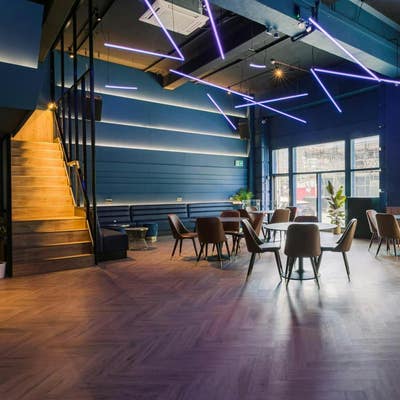
Cocktail Bar Venues in London

London's cocktail bar scene reads like a choose-your-own-adventure novel where every chapter leads somewhere unexpected. From Lyaness's electric-blue salon overlooking the Thames to Control Room B's industrial cathedral inside Battersea Power Station, the capital's mixology venues have evolved far beyond simple drinks service. Today's cocktail bars double as event theatres, where Oriole pairs Latin jazz with aperitif serves in Covent Garden's basement, whilst Mr Fogg's empire spans seven Victorian fantasies across Mayfair and Soho. With capacities ranging from Nightjar's intimate 90-person speakeasy sessions to Cahoots' 320-guest tube station takeovers, Zipcube connects you with cocktail venues that transform corporate receptions into talked-about experiences.
Enter dates and number of people to get better results.
Lower Floor
1 Review1 Review
  1. · Southwark
Lower Floor
Price£1,350
Up to 150 people ·
The Judge’s Court dining room
1 Review1 Review
  1. · Leicester Square
The Judge’s Court dining room
Price£3,080
Up to 130 people ·
Full Venue Hire
No reviews yetNew
  1. · South Kensington
Full Venue Hire
Price£3,360
Up to 80 people ·
Rake's Front Room
No reviews yetNew
  1. · London Liverpool Street
Rake's Front Room
Price£8,960
Up to 110 people ·
Purple Bar
No reviews yetNew
  1. · Oxford Circus
Purple Bar
Price£560
Up to 40 people ·
Venue Space
No reviews yetNew
  1. · Clapton
Venue Space
Price£800
Up to 40 people ·
G Bar at the Grosvenor Piccadilly
1 Review1 Review
  1. · Piccadilly Circus
G Bar at the Grosvenor Piccadilly
Price£500
Up to 60 people ·
Private Dining Room
No reviews yetNew
  1. · Covent Garden
Private Dining Room
Price£3,920
Up to 80 people ·
Conference room
No reviews yetNew
  1. · Chancery Lane
Conference room
Price£4,480
Up to 400 people ·
Piano Bar
1 Review1 Review
  1. · Leicester Square
Piano Bar
Price£1,680
Up to 100 people ·
Skip the scroll
Get a tailored shortlist from an expert
We'll send you a free expertly-curated selection of your best matches on (and off) the market
Main Bar
No reviews yetNew
  1. · Hoxton
Main Bar
Price£2,500
Up to 50 people ·
Pirates Cave
No reviews yetNew
  1. · Clapham Junction
Pirates Cave
Price£224
Up to 25 people ·
Whole Venue
No reviews yetNew
  1. · Stratford
Whole Venue
Price£20,160
Up to 700 people ·
Garden Room & Banksy Garden
No reviews yetNew
  1. · Chalk Farm
Garden Room & Banksy Garden
Price£1,120
Up to 120 people ·
Main Club Room
No reviews yetNew
  1. · Sloane Square
Main Club Room
Price£3,360
Up to 150 people ·
The Restaurant & Bar
No reviews yetNew
  1. · London Fenchurch Street
The Restaurant & Bar
Price£9,800
Up to 300 people ·
Sky Pool
No reviews yetNew
  1. · London Bridge
Sky Pool
Price£2,240
Up to 40 people ·
Basement
No reviews yetNew
  1. · Brixton
Basement
Price£1,000
Up to 30 people ·
ClubTEN
2 Reviews2 Reviews
  1. · London Blackfriars
ClubTEN
Price£9,408
Up to 225 people ·
The Kitchen
No reviews yetNew
  1. · Parsons Green
The Kitchen
Price£1,120
Up to 60 people ·

Your Questions, Answered

London's cocktail bar minimums follow a fascinating sliding scale that reflects both location and timing. Midweek bookings at venues like Callooh Callay's JubJub room start from £500, whilst weekend exclusivity at Lyaness commands £30,000+. The sweet spot for most full-venue Friday night takeovers sits between £8,000-£15,000, with places like Nightjar Shoreditch at £6,000 for weekends and Oriole's combined spaces reaching £20,000. Smaller rooms offer flexibility: TT Liquor's cinema runs £1,000-£3,000, whilst Mr Fogg's various parlours offer individual spaces from £1,000 upward. Central locations naturally command premiums, but Shoreditch and Islington deliver comparable atmosphere at 30% less than Mayfair equivalents.

Control Room B takes the crown for sheer drama, occupying the actual 1950s control room of Battersea Power Station with its original dials and gauges intact. Cahoots delivers multiple themed zones including an actual tube carriage for 30 guests, whilst Mr Fogg's Society of Exploration features a life-size Victorian train compartment. For something more intimate, Oriole's Bamboo Bar caps at 40 with its own aperitif menu, and Scarfes Bar at Rosewood London showcases Gerald Scarfe's provocative artwork in a library-style setting. The Coral Room wraps guests in Art Deco glamour with Murano chandeliers, whilst Opium's three distinct rooms (Peony, Apothecary, Academy) create a labyrinthine Shanghai experience across Chinatown's hidden floors.

December bookings at premium venues like Lyaness and The Coral Room typically fill by September, with some corporates securing dates in July. For standard Friday night takeovers, 6-8 weeks provides decent choice, though headline venues need 10-12 weeks minimum. Interestingly, daytime hire offers more flexibility: Scarfes Bar opens for private breakfast and lunch events with just 3-4 weeks' notice. January through March represents the golden window for spontaneous bookings, when venues like Swift Soho might accept 2-week lead times. Seasonal spaces complicate matters further: rooftop bookings at TT Liquor or Queen of Hoxton require May commitments for peak summer dates, whilst Mr Fogg's launches often release new spaces with limited autumn availability.

Old Street dominates the accessibility stakes with Nightjar literally 1-2 minutes from the station exit and Callooh Callay within 7-8 minutes' walk. Leicester Square offers the densest concentration with Opium (2-3 mins), Mr Fogg's Gin Parlour (2-3 mins), and The Alchemist St Martin's Lane all under 3 minutes away. Covent Garden station connects to Oriole in 4-5 minutes through The Yards development. For Crossrail convenience, Tottenham Court Road reaches The Coral Room and Mr Fogg's House of Botanicals within 3-7 minutes. Northern Line users benefit from Battersea Power Station's direct connection to Control Room B (2-3 mins), whilst Liverpool Street links to multiple Shoreditch venues via a 10-minute walk or quick Overground hop.

Oriole leads the pack with its full Latin-influenced dining menu alongside world-class cocktails in the basement restaurant space. Laki Kane delivers theatrical tiki dining complete with fire shows for up to 85 seated guests, whilst Opium pairs dim sum with Shanghai-style serves across its multi-room setup. The Alchemist St Martin's Lane accommodates 110 in the restaurant section with molecular gastronomy-inspired plates matching their theatrical drinks. For elevated options, Scarfes Bar creates bespoke breakfast and lunch menus for daytime events, and The Bloomsbury Club Bar leverages the hotel's kitchen for substantial catering. Swift Soho keeps things simple with quality bar snacks, whilst Cahoots adds wartime-themed nibbles to complete the 1940s experience across their 320-person capacity.

Cahoots claims the crown with its combined Underground and Ticket Hall spaces accommodating 320 standing guests across multiple themed areas. Control Room B follows with 250 standing in its dramatic Battersea Power Station setting, whilst The Alchemist St Martin's Lane manages 220 in a more conventional layout. Mr Fogg's Apothecary surprises with 220 capacity despite its Mayfair address, and both Callooh Callay venues (Shoreditch and Chelsea) handle 180 guests when fully opened up. For context, most cocktail bars max out around 150: Lyaness, Mr Fogg's Society of Exploration, The Coral Room, and TT Liquor's Cellar Bar all hit this ceiling. The sweet spot for atmosphere versus capacity typically lands at 90-120 guests, where venues like Nightjar and Swift maintain intimacy.

TT Liquor's seasonal rooftop in Shoreditch opens May through September with space for 120 standing guests overlooking Kingsland Road's creative corridor. The Bloomsbury Club Bar features a covered courtyard that works year-round with heating, accommodating 90 total between indoor and outdoor zones. While not traditional rooftops, several venues maximise natural light: Mr Fogg's House of Botanicals floods its Treehouse level with sunshine through botanical installations, and Lyaness's Thames-side position delivers outdoor terrace vibes through floor-to-ceiling windows. Madison and SUSHISAMBA (though primarily restaurants) offer proper rooftop cocktail experiences at the 38th floor and St Paul's-adjacent locations respectively. The Coral Room connects to Dalloway Terrace for overflow summer events combining indoor glamour with garden party potential.

Scarfes Bar at Rosewood London epitomises corporate sophistication with daytime exclusivity from 7am-2pm and Gerald Scarfe's commanding artwork setting a power-player tone. Lyaness delivers boardroom-impressing credentials with its multi-award-winning status and Thames panoramas for up to 150 guests. Control Room B provides conversation-starting industrial heritage that tech companies particularly love for product launches. For more intimate client entertainment, Mr Fogg's Residence in Mayfair seats 150 in eccentric Victorian splendour, whilst The Coral Room combines Art Deco elegance with Bloomsbury's literary heritage. The Alchemist offers reliable high-capacity options across multiple London sites, and Swift Soho's reputation among cocktail cognoscenti adds credibility to any invitation. Zipcube can arrange exclusive morning coffee-to-cocktails transitions at several venues.

TT Liquor leads London's hands-on cocktail education scene with dedicated masterclass spaces alongside their 150-capacity Cellar Bar and 52-seat cinema for hybrid experiences. Sessions typically run 90-120 minutes with groups of 10-40 learning 2-3 cocktails, though some venues accommodate up to 100 with staggered rotations. Pricing starts around £45-65 per person for standard packages, climbing to £100+ for premium spirits or guest bartenders. Most Mr Fogg's venues offer theatrical twists on traditional classes, incorporating costume elements or historical narratives. Nightjar adds live jazz to their sessions, Callooh Callay includes molecular techniques, and Oriole weaves in Latin spirits education. Corporate favourites include competitive team-building formats, whilst social groups prefer relaxed make-and-mingle approaches. Book masterclasses 4-6 weeks ahead, particularly for December team-building season.

Zipcube transforms cocktail venue hunting from endless email chains into streamlined success by maintaining real-time availability across London's entire mixology landscape. Unlike going direct, we hold relationships with venue groups like Mr Fogg's (seven London sites) and independent gems like Nightjar simultaneously, comparing true costs beyond headline minimum spends. Our platform reveals hidden inventory: that Control Room B Tuesday slot, Oriole's soft-launch availability, or when Scarfes Bar unexpectedly opens for evening hire. We decode complex pricing structures, flagging when Callooh Callay's £500 midweek minimum beats their £3,000 weekend rate, or when combining TT Liquor's cinema with their Cellar Bar creates package savings. Post-booking, we coordinate cocktail customisation, entertainment additions, and those crucial December hold-and-release strategies that secure backup options without penalty.

Cocktail Bar Venues in London:
The Expert's Guide

Understanding London's Cocktail Bar Geography

London's cocktail excellence clusters in distinct pockets, each offering different advantages for event planners. Soho and Covent Garden pack the highest density, with Opium, Swift, and multiple Mr Fogg's outposts within a 10-minute walking radius. This central concentration means backup options if plans change, plus post-event possibilities for continuing celebrations.

Shoreditch and Hoxton deliver creative edge at better value, where Nightjar, Callooh Callay, and TT Liquor attract design agencies and tech startups seeking authenticity over polish. The Northern Line extension revolutionised access to Control Room B at Battersea Power Station, transforming a former trek into a 20-minute door-to-door journey from Central London.

Mayfair maintains premium positioning with Mr Fogg's Residence and Apothecary commanding higher minimums but delivering unmatched impressiveness for international clients. Meanwhile, The City stays surprisingly quiet evenings and weekends, making venues more negotiable on rates.

Decoding Minimum Spends and Hidden Costs

Minimum spend structures in London cocktail bars operate like airline pricing: complex, variable, and rarely transparent. A £10,000 minimum at Lyaness might seem steep until you calculate 150 guests averaging £67 each across a four-hour event, including welcome cocktails, free-flowing service, and canapés.

Hidden costs lurk in details: late licenses (£500-£1,500), security requirements (£35-50 per hour per guard), and service charges (12.5-15%) that apply to the minimum spend itself. Some venues like The Alchemist include basic AV, whilst others charge £500+ for simple PA systems.

Seasonal variations affect pricing dramatically. That same Oriole booking costs £8,000 in January versus £20,000 in December. Tuesday-Thursday bookings often halve weekend rates, and 5pm-9pm slots sometimes escape evening minimums entirely. Zipcube's platform displays true total costs, preventing budget surprises.

Cocktail Bar Styles and Their Event Applications

Speakeasy-style venues like Nightjar and Oriole excel for intimate gatherings where conversation matters. Their low ceilings and jazz soundtracks create natural networking environments, though the very features that generate atmosphere can challenge presentations or speeches.

Theatrical venues across Mr Fogg's collection and Cahoots provide instant talking points, breaking ice through sheer environmental immersion. The tube carriage at Cahoots or Society of Exploration's train compartment guarantee Instagram moments, though some corporate clients find the whimsy overwhelming.

Contemporary spaces like Lyaness and The Coral Room offer versatility for brand activations, their neutral-luxe aesthetics accommodating projection mapping, temporary installations, or corporate branding without clashing. Industrial venues like Control Room B and TT Liquor suit product launches where the venue's raw character amplifies rather than overshadows the focal point.

Capacity Planning for Cocktail Events

The cocktail bar capacity sweet spot hits between 80-120 guests, where venues like Swift Soho (90 capacity) and Nightjar (90 standing) maintain energy without crushing guests. Below 60 people, spaces can feel sparse unless you book smaller dedicated rooms like Oriole's Bamboo Bar (40) or Mr Fogg's Pawnbrokers' Strong Room (25).

Standing capacities assume cocktail-party flow, but add food stations or entertainment and reduce numbers by 20-30%. Lyaness advertises 150 standing but comfortable mingling with substantial canapés works better at 120. Seated formats slash capacities further: Laki Kane drops from 150 standing to 85 seated.

Multi-space venues offer progression possibilities. Start drinks in Opium's Apothecary (40 capacity), then reveal the Academy room (50 capacity) for entertainment. Or use Cahoots' Ticket Hall for arrivals before descending to the Underground platforms, creating journey narratives that maintain energy across longer events.

Timing Your Cocktail Bar Event

The 6pm-11pm slot remains standard for corporate cocktail events, providing after-work accessibility whilst avoiding late-license complications. However, Scarfes Bar's 7am-2pm private availability opens possibilities for breakfast meetings transitioning into liquid lunches, particularly effective for international clients battling jet lag.

Thursday emerged as London's new Friday for events, offering weekend energy without Saturday morning regrets. Venues often price Thursday at midweek rates despite delivering Friday atmosphere. Sunday sessions at Swift (with live jazz) or afternoon bookings at Mr Fogg's House of Botanicals capitalise on unique programming these venues offer on traditionally quiet days.

December demands different thinking entirely. Book early September or embrace January, when venues eager for post-Christmas revenue offer exceptional packages. The first two weeks of December stay manageable, but 15th-23rd becomes pure gridlock with triple pricing at some venues.

Entertainment and Experience Additions

Live music elevates cocktail events from drinks gatherings into memorable experiences. Oriole includes live Latin jazz in their basement setup, whilst Nightjar's nightly performances span swing to blues. Budget £400-£800 for quality duo/trio additions at venues without built-in entertainment.

Cocktail masterclasses create participation beyond passive consumption. TT Liquor's dedicated setup handles 40 students simultaneously, whilst most venues manage 10-20 person sessions requiring rotation for larger groups. Classes run £45-£100 per person depending on complexity and premium spirits involved.

Immersive elements distinguish modern cocktail events: Laki Kane's fire shows, molecular mixology demonstrations at Callooh Callay, or historical storytelling throughout Mr Fogg's venues. Even simple additions like cocktail competition judging or guest bartender appearances (£500-£2,000 for names) transform standard receptions into talking points.

Food Strategy for Cocktail Events

Cocktail bars typically aren't restaurants, yet food remains crucial for events extending beyond two hours. Venues like Oriole and Laki Kane offer full kitchens delivering substantial menus, whilst others rely on canapé partnerships or external catering permissions.

Bowl food emerged as the cocktail party solution: more substantial than canapés, less formal than plated dining. Budget £15-£25 per head for adequate bowl food service, or £25-£40 for generous portions including dessert. Opium's dim sum provides natural bowl-food format, whilst The Alchemist's sharing plates adapt well to standing receptions.

Dietary requirements prove challenging in cocktail bar kitchens optimised for standard menus. Establish vegan/gluten-free percentages early, as some venues require minimum orders for special preparations. Kosher or Halal needs might necessitate external catering, which roughly 60% of cocktail bars accommodate with corkage-style fees.

Technical Requirements and Limitations

Cocktail bars prioritise atmosphere over presentations, meaning AV capabilities vary wildly. Control Room B's industrial scale handles major production, whilst speakeasies like Nightjar resist any technology disrupting their carefully crafted mood. Most manage basic PA systems for speeches and background music control.

WiFi seems standard but often struggles with 100+ simultaneous connections. Events requiring heavy digital interaction need dedicated solutions (£200-£500 for event WiFi). Power access for charging stations or display screens requires advance planning, as heritage venues particularly lack sufficient outlets.

Lighting control affects event photography dramatically. The Coral Room and Scarfes Bar offer adjustable schemes supporting both networking brightness and atmospheric dining. Darker venues like Nightjar or Opium's Apothecary create gorgeous ambience but challenge professional photography without additional lighting (£300-£800 for event photography lighting).

Accessibility Considerations

London's cocktail bars present accessibility challenges, with many occupying basements or heritage buildings exempt from full compliance. Ground-floor venues like The Alchemist St Martin's Lane and Control Room B offer step-free access, whilst Lyaness provides lift access within Sea Containers London.

Basement venues dominate the speakeasy category: Nightjar, Oriole's main space, and Opium all require stair navigation. Some offer alternative arrangements like Mr Fogg's Tavern (ground floor) versus the Gin Parlour above, allowing partial participation for mobility-impaired guests.

Beyond physical access, consider sensory factors. Low lighting and loud music at venues like Cahoots or Laki Kane might overwhelm some guests. The Coral Room and Scarfes Bar provide calmer environments with adjustable elements. Always confirm accessible toilet facilities, as some venues require navigating different floors.

Securing Your Cocktail Bar Booking

London's competitive cocktail venue market requires strategic booking approaches. Initial enquiries through Zipcube secure provisional holds across multiple venues simultaneously, avoiding the sequential rejection cycle of direct bookings. Most venues offer 7-14 day provisional holds, though December bookings might require 48-hour decisions.

Contracts typically demand 50% deposits with 30-day balance settlements. Cancellation terms vary dramatically: premium venues like Lyaness might retain full deposits for late cancellations, whilst smaller venues like Swift show more flexibility. Force majeure clauses gained prominence post-2020, but definitions vary significantly between venues.

Guest list management affects minimum spends when attendance drops. Some venues recalculate minimums based on actual attendance, whilst others hold firm regardless. Negotiate attrition clauses allowing 10-20% reduction without penalty. Payment methods matter too: corporate billing often requires pre-approval, and some venues add 2-3% for credit card transactions over certain thresholds.