Office Spaces in Fitzrovia
The AI-powered marketplace with 10,000+ verified spaces. Browse instantly, or let our concierge find the right one for you.
Start your search
Office Spaces in Fitzrovia


Trusted by teams at
 Accenture
 Deloitte
 BBC
BBC Amazon
 Google
 Revolut
 Monzo
Monzo Wise
Wise




Recently reviewed in Fitzrovia, London, UK


How it works
Search or describe
Browse 10,000+ verified spaces, or send one brief to Zia, our AI concierge.
Compare and enquire
Real photos, transparent pricing, detailed amenities. Enquire with one click.
Book securely
Pay through Zipcube with booking protection. Contracts and invoicing handled.
Arrive and enjoy
Full support before, during and after — real humans, in English and French.
Loved by bookers
The Zipcube team are so helpful, responsive and accommodating of our questions and requests. Every time we use Zipcube's services it is a pleasant experience. Thank you Zipcube!
Zipcube took the stress out of organising my office event. I was finding contacting a lot of different venues, checking availability and comparing prices pretty stressful but once I made contact with Zipcube it all became very easy. Really great timely service, support and communication. Would have no hesitation booking through Zipcube again.
I have a fantastic experience with Zipcube, specially with Karolina — she is friendly, very quick to respond, great communication, always looking out for my needs about the room we need. I'm very happy with all the service.
As seen on
 The New York Times
 Evening Standard
 BBC
BBCYour Questions, Answered
Fitzrovia operates on its own frequency. Unlike the corporate uniformity of Canary Wharf or the tourist chaos of Covent Garden, this pocket between Oxford Street and Euston Road maintains a village feel despite hosting major workspace players. Fora alone runs eight buildings here, from the Innovation Lab at 42 Berners Street to the rooftop terrace at Douglas House on Great Titchfield Street.
The area's medical publishing past lives on in refurbished Georgian townhouses, whilst new developments like Wells Mews bring enterprise-grade facilities. Transport connectivity beats most zones: Tottenham Court Road's Elizabeth line puts Heathrow 35 minutes away, whilst Oxford Circus, Goodge Street and Great Portland Street create a web of options all under 10 minutes' walk.
Fitzrovia's pricing reflects its postcode prestige and transport links. Entry-level serviced offices start around £265 per person monthly at Regus Great Portland Street, though most quality spaces sit between £600-900. Work.Life disrupts the market at £494 per person for private offices at Foley Street, whilst premium addresses like Mortimer House push towards £1,600.
Meeting rooms typically run £45-115 hourly, with Fora's tech-enabled spaces at the higher end. Coworking memberships offer flexibility from £350 monthly at Landmark New Cavendish Street. Remember these rates include utilities, cleaning, reception services and often meeting room credits, making direct comparisons with traditional leases misleading.
Smart startups leverage Fitzrovia's range to scale without relocating. Work.Life's community-driven model at 33 Foley Street offers private offices from just two desks with 24/7 access and strong peer networks. When you outgrow that, Gilmoora House on Mortimer Street provides unbranded serviced suites up to 40 desks with personal service.
For rapid growth trajectories, consider Storey's flexible floors at 338 Euston Road (Regent's Place) accommodating 27-100 desks with campus amenities. The clever move? Start with a smaller suite at operators offering multiple locations, then expand within their portfolio as needed.
Fitzrovia's transport superiority becomes clear when you map actual walking times. From Fora's 2 Stephen Street, you reach Tottenham Court Road in four minutes, accessing the Elizabeth and Northern lines. Oxford Circus sits five minutes from most Mortimer Street venues, connecting Central, Victoria and Elizabeth lines.
Great Portland Street station serves the western edge, putting venues like The Smiths Building three minutes from the Metropolitan and Hammersmith lines. Even Euston and King's Cross lie within 15-minute walks from northern Fitzrovia. This multi-station coverage means transport delays rarely impact the entire area, a crucial advantage over single-station dependent districts.
Outdoor space transforms from luxury to necessity in Fitzrovia's newer developments. Fora leads with terraces at 22 Berners Street (levels 3-6), Douglas House's rooftop on Great Titchfield Street, and The Smiths Building's member terrace. These aren't token balconies but proper entertaining spaces with seating and views.
Landmark's 30 Newman Street includes two roof terraces in its refurbishment, whilst GPE's Elsley House features a shared rooftop accessible to all tenants. Even smaller operators deliver: Metspace's Gosfield Street townhouse includes a modest outdoor area. Book summer viewings to properly assess these spaces; London weather makes them genuinely usable only five months yearly.
Fitzrovia operators compete heavily on wellness, creating genuinely impressive facilities. Mortimer House combines a full gym with yoga studio alongside its workspace floors, whilst Fora's Douglas House features dedicated 'recharge rooms' and oxygen rooms for focus work.
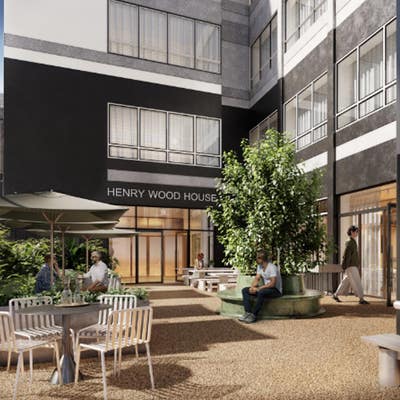
Most buildings now include secure bike storage with showers: Fora's 42 Berners Street provides full changing facilities, whilst Storey at 338 Euston Road adds a dedicated wellbeing room. Henry Wood House takes it further with a proper fitness studio inherited from its BBC days. These amenities increasingly influence retention; teams using on-site gyms report 30% higher workspace satisfaction.
Meeting room economics vary dramatically between operators. Work.Life includes room access in private office memberships, whilst Fora charges from £104 hourly for external bookings at their Berners Street venues. Most serviced offices bundle 20-40 hours monthly, then charge £40-80 for additional time.
Capacity ranges from four-person rooms at The Smiths Building to 30-seat boardrooms at 2 Stephen Street. Video conferencing comes standard at premium operators but check smaller venues; WorkPad's Eastcastle Street includes free meeting rooms but limited AV. Book rooms minimum 48 hours ahead during conference season (September-November); same-day availability becomes scarce.
Fitzrovia attracts creative and professional services firms valuing central access over corporate clustering. Media companies populate Charlotte Street's eastern edge, medical publishers maintain their historical presence around Great Portland Street, whilst tech startups favour the Fora ecosystem.
Mortimer House's member model attracts boutique consultancies and creative agencies seeking hospitality-grade facilities. The Spaces location at Mappin House, with capacity for 450 workstations, hosts larger teams needing floor flexibility. Recent Storey lettings at Regent's Place signal growing enterprise interest, particularly from firms wanting campus-style amenities without Paddington prices.
Flexibility defines Fitzrovia's office market, with options from daily hot-desking to five-year managed floors. Regus and Spaces offer monthly rolling contracts after initial three-month terms, perfect for project teams. Work.Life provides similar flexibility with one-month notice periods.
Premium operators like Fora typically require 12-month commitments for private offices, though negotiate harder in January and August when availability peaks. Managed floors from GPE or Storey start at 24 months but include break clauses. The sweet spot for negotiation? 18-24 month terms often unlock 10-15% discounts versus shorter commitments.
Fitzrovia offers superior transport and variety versus Marylebone's village charm and parking. Price-wise, Fitzrovia runs 10-20% higher: where Marylebone serviced offices average £550-750 per person, Fitzrovia commands £650-900 for comparable quality.
The real difference lies in inventory depth. Fitzrovia provides 20+ flexible workspace operators from boutique townhouses like Metspace's Gosfield Street to enterprise floors at Wells Mews. Marylebone concentrates around Marylebone Station with fewer options. Choose Fitzrovia for growth flexibility and transport resilience; pick Marylebone for parking access and a calmer pace. Both beat Mayfair prices by 30-40%.

